
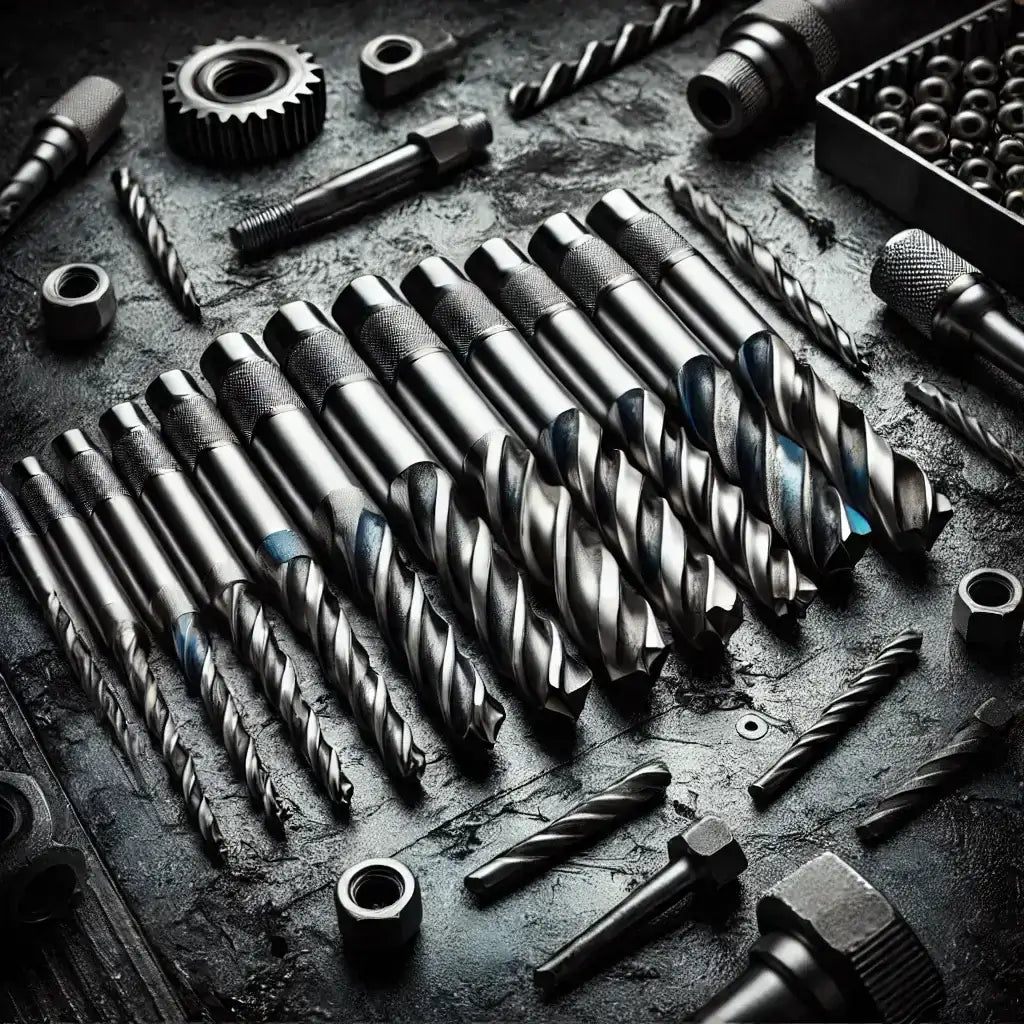
Choosing the right metal drill bit is crucial for achieving the best results in various materials and applications. In this post, we go through what is meant by different designations such as HSS-G, HSS-E, HSS-R, and Type-N, as well as which materials these tools are best suited for.
What does HSS-G mean?
HSS-G stands for High-Speed Steel - Ground and indicates that the drill bit is made of high-speed steel and ground with high precision. This provides:
- High precision thanks to exact cutting edges.
- Efficient drilling with less effort.
- Longer service life and cleaner holes, especially in metals such as steel, aluminum, and alloys.
HSS-G drill bits are often used in professional environments for machining materials of medium hardness and are ideal for constructions that require accuracy.
See our selection of HSS-G drill bits here. We also have a version of HSS-G with built-in pre-drilling here.
What is HSS-E?
HSS-E drill bits are made of high-speed steel with an addition of cobalt (5–8%), which gives them outstanding properties:
- Increased heat resistance – can handle temperatures up to 650 °C.
- High wear resistance – ideal for hard materials such as stainless steel and titanium alloys.
- Better durability in demanding applications, such as drilling in nickel-based superalloys and high-alloy steels.
HSS-E drill bits are indispensable in advanced industries such as aerospace, medical technology, and chemical production.
See our selection of HSS-E drill bits here.
What does HSS-R mean?
HSS-R stands for High-Speed Steel - Rolled and indicates that the drill bit is manufactured by rolling rather than grinding. This results in:
- Lower cost compared to ground drill bits.
- High flexibility, which reduces the risk of fractures during simpler drilling.
- Less sharpness and precision than HSS-G, making them best suited for softer metals, wood, and plastic.
HSS-R is a good alternative for simpler jobs and hobby projects where precision is not as critical.
See our selection of HSS-R drill bits here.
What does Type-N mean?
Type-N describes the spiral's helix angle, which is normal (20–30°). This is standard for metal drill bits and works well for materials with medium hardness. Type-N drill bits offer:
- Good chip removal and stable drilling.
- Suitable for materials such as unalloyed steel, aluminum, and plastic.
For harder materials (such as hardened steel), however, Type-H may be better, while Type-W is suitable for very soft materials.
Material groups for HSS-E drill bits
HSS-E drill bits are specifically designed to handle difficult and heat-sensitive materials. They are ideal for:
- Stainless steels (austenitic, martensitic, duplex).
- Hardened steels and high-alloy steels.
- Nickel- and cobalt-based superalloys such as Inconel and Hastelloy.
- Titanium alloys and high-strength aluminum alloys.
- Cast iron (gray iron) and copper alloys.
Proper use of coolant and appropriate cutting parameters are crucial to optimize performance.
Material group designations
When materials are specified with groups such as 1.1–1.4 / 2.1–2.2 / 3.1 / 4.1–4.11 / 5.3–5.4, it refers to standardized classifications according to ISO 513:
- 1.x: Unalloyed and low-alloy steel (low to high strength).
- 2.x: Stainless steel (austenitic, ferritic, martensitic).
- 3.x: Cast iron (lamellar graphite).
- 4.x: Non-ferrous metals such as aluminum, copper, and brass.
- 5.x: Superalloys based on nickel and cobalt.
This helps users choose the right tool for each specific material.
Summary: Choosing the right metal drill bit
Understanding the difference between HSS-G, HSS-E, and HSS-R, as well as material groups, is crucial for succeeding in metalworking. Here is a quick guide:
- HSS-G: For precision work in steel, aluminum, and alloys.
- HSS-E: For demanding materials such as stainless steel, titanium, and superalloys.
- HSS-R: For simpler jobs in soft materials.
- Type-N: Standard choice for medium-hard materials.
With the right drill bit and knowledge, you can improve both performance and tool life. Do you need more guidance? Leave a comment and we will help you!